
Aluminium Slat Fencing
Modern aluminium slat fencing, screens and front fences that look sharp and stand up to Perth's sun and coastal air. Call Perth Fencing Experts today!
Learn More →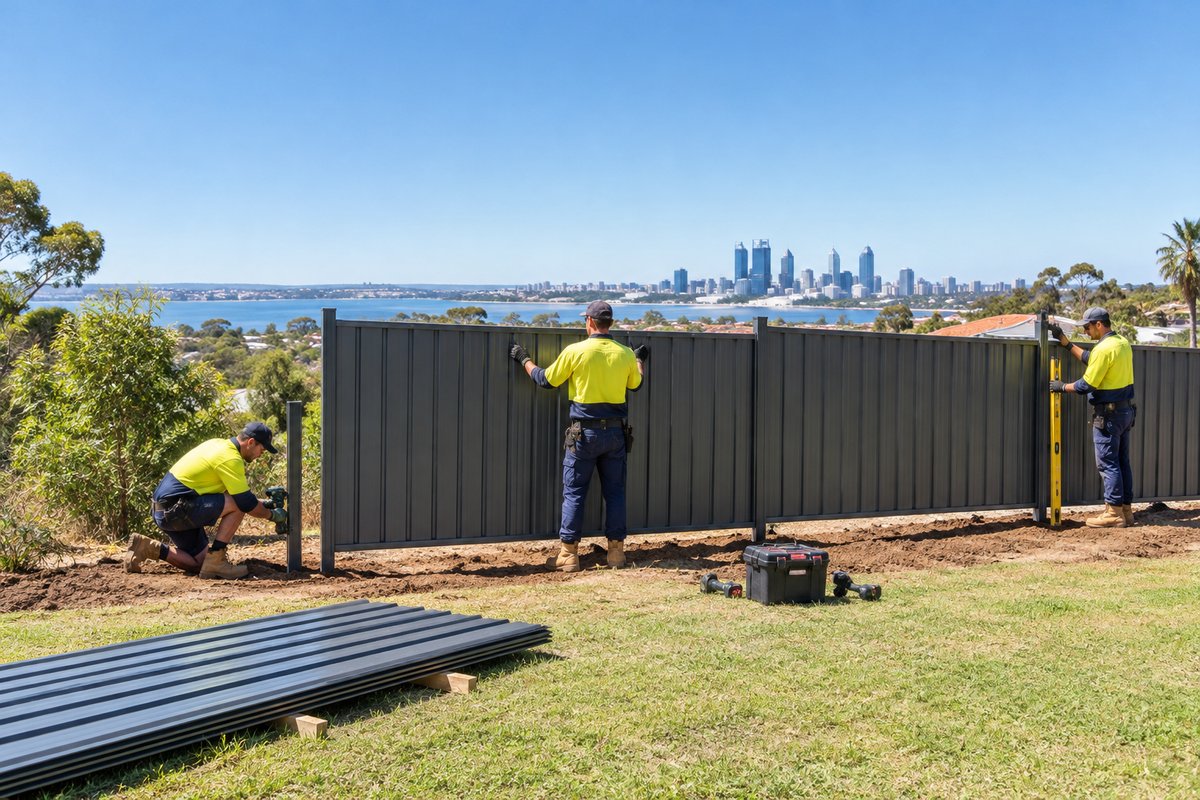
Supply and install Colorbond fencing for boundaries, side returns and backyards across Perth, in a range of colours and heights. Call Perth Fencing Experts today!
Request a Free Quote
Colorbond fencing is the most common boundary fence on Perth blocks, and there's a good reason for it. The steel sheets don't rot, termites can't eat them, and they don't crack the way old fibro panels do. We install complete Colorbond fences using steel posts, top and bottom rails and full-height infill sheets, with every post set in concrete. If you're replacing a tired timber fence or a cracked fibro boundary, or fencing a brand-new block in a growth suburb, we'll match the panel height and colour to your street and your neighbours.
Perth ground is mostly sand, and loose sand doesn't hold a post the way clay does. That's why we size footings to the soil we actually find on site, not to a standard template. The afternoon sea breeze pushes hard against a solid steel fence, especially on open corner blocks and new estates with no mature trees for shelter. Homes near the coast also get salt spray. Salt eats at cut edges and fixings, so we check how close you are to the ocean before we choose materials.
Sloping blocks are common in the hills suburbs and along limestone ridges near the coast. On those blocks we step panels down the fall or add plinths along the base so sand doesn't wash under the fence after a winter downpour. Most new fences also need a way through. We fit matching steel pedestrian and driveway gates through our gate installation service. If a section has been dented by a falling branch or a reversing trailer, our fence repairs team can replace individual sheets and rails, so you don't have to rebuild the whole run.
From checking the boundary to hanging the last gate
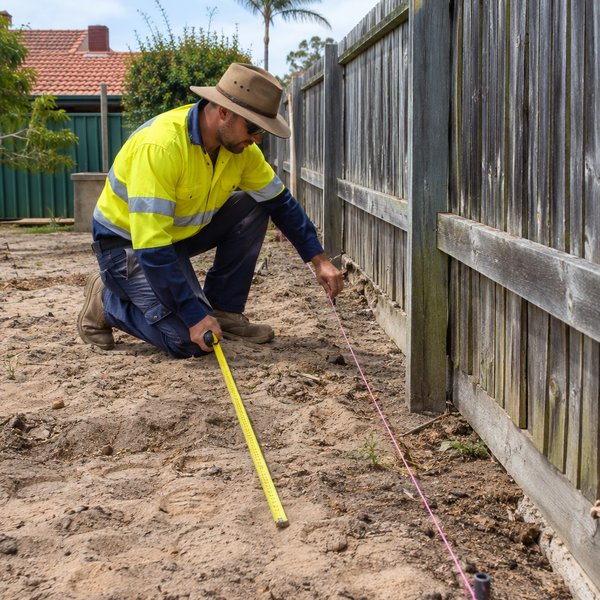
We walk the fence line, confirm where the boundary sits and look at the ground for sand, limestone, roots and slope. We also check for underground services, retaining walls and anything that will affect post spacing. This is when we confirm panel height, colour and gate positions with you and, where relevant, your neighbour.
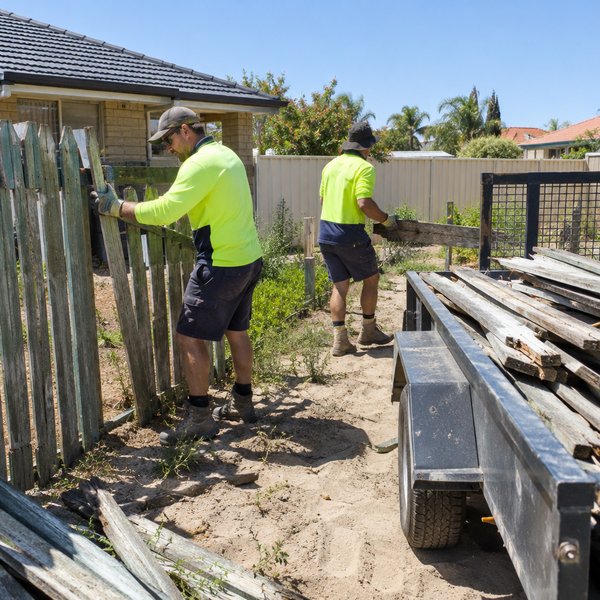
We pull out the old sheets, palings or panels and break out old footings where they're in the way. Rubbish goes on our trailer, not on your lawn. Older fibro fences can contain asbestos and need licensed removal before we start, so we'll tell you during the site check if we suspect this.
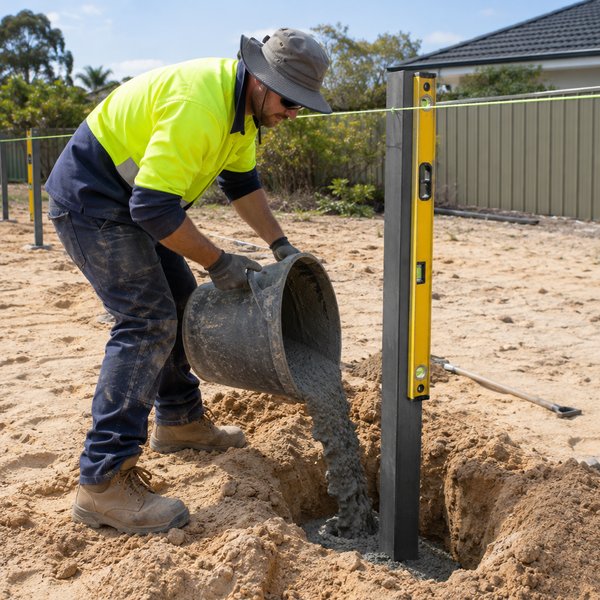
We auger post holes to depth, set each steel post plumb against a tight string line and fill around it with concrete. In loose Perth sand we take extra care with the footings, because they're what stops the fence leaning after a few seasons of strong wind. The concrete then cures before any panels go on.
We fit the bottom and top rails, slide in the Colorbond infill sheets and fix everything firmly. Plinths, step-downs and extensions go in as needed. Then gates are hung and adjusted to swing and latch properly. Before we leave, we clear off metal swarf and offcuts so they can't leave rust spots on the new steel.
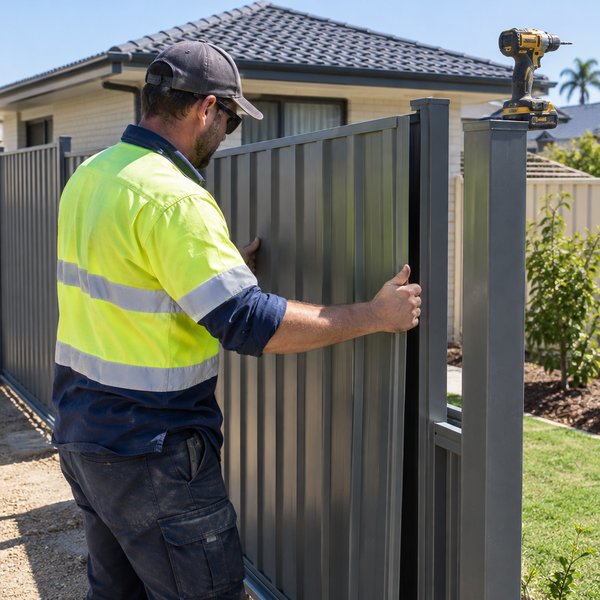
Privacy, strength and less maintenance in our hot, windy climate
Properly concreted steel posts hold their line when winter fronts and strong sea breezes push against the fence. You won't spend the year propping up a leaning section or chasing loose palings across the yard. It also means fewer awkward chats with the neighbour about whose turn it is to fix things.
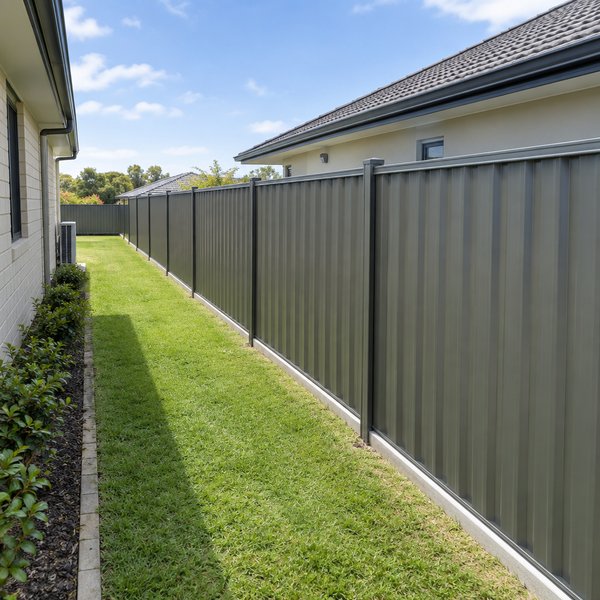
Solid steel sheets block sightlines into your backyard, so you can use the pool area, alfresco or kids' play space without feeling watched. A full-height fence also helps soften traffic noise on busier roads. Add a slat or lattice extension if you need extra height over a neighbour's window.
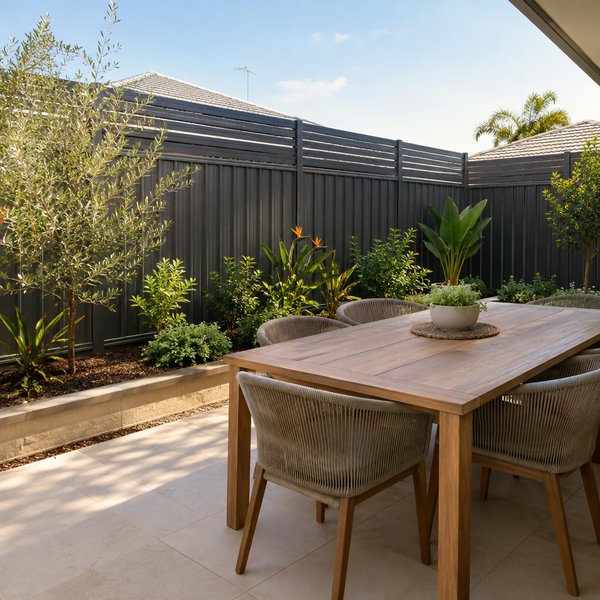
Colorbond doesn't need painting, oiling or treating against termites, which matters when summer heat dries out and splits timber. A hose-down now and then removes dust and salt, especially on coastal blocks. That leaves you more weekends free instead of staining fence palings.
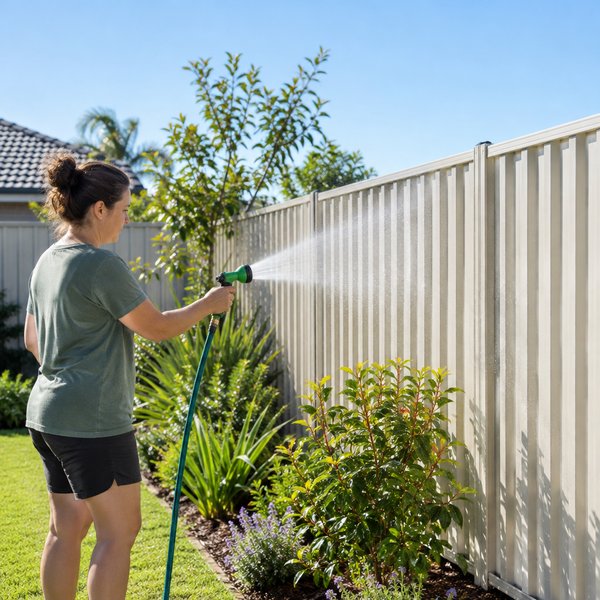
We see Perth's sandy coastal plain, hills gravel and limestone ridges every week. We adjust footings and post spacing to what's under your block. That's what keeps a steel fence standing straight against strong afternoon sea breezes.
Most Colorbond fences are shared between two households. We're used to quoting both sides, explaining the work in plain terms and keeping access tidy on both properties. That helps a shared fence go up without arguments.
Because we also install gates, pool fencing and aluminium slat fencing, we can plan the whole boundary in one go. Driveway gates, side gates and a screened front fence can all match. Later on, our repair service can swap out a damaged sheet without disturbing the rest.
We're a local crew from Canning Vale, not a call centre. We know the estate colour guidelines in newer suburbs and the tricky access on older blocks. We understand how coastal and inland sites wear on a fence differently.
Common questions answered
It depends on the length of the fence, the ground conditions and whether an old fence has to be removed first. Rock-hard limestone, slopes that need plinths and gates all add work. We'll explain the expected time on site when we quote, once we've seen the block.
The main factors are the total length, panel height, any extensions, the number and type of gates and how much old fencing has to come out. Sloping blocks needing step-downs or plinths and sites with limestone or difficult access also affect the price. We give you an itemised quote after the site check, so you can see where the money goes.
In WA, dividing fences are generally shared between neighbours, and it's best to agree on the height, colour and cost split before work starts. We can quote both owners and set out the boundary line work clearly so everyone knows what they're paying for. If there's a disagreement, the WA Dividing Fences Act sets out the formal process.
Salt air near the coast is harder on any steel fence, especially at cut edges, fixings and where sprinklers keep the bottom rail wet. We ask how close you are to the ocean so we can recommend the right materials for your exposure. Hosing salt off occasionally and keeping garden beds and reticulation clear of the base helps the fence last.
Often yes, but it depends on the wall's condition and whether there's room to set posts safely behind or through it. In some cases we use plinths or set posts at the base so the fence doesn't load up an old wall. We'll inspect the wall before recommending an approach.